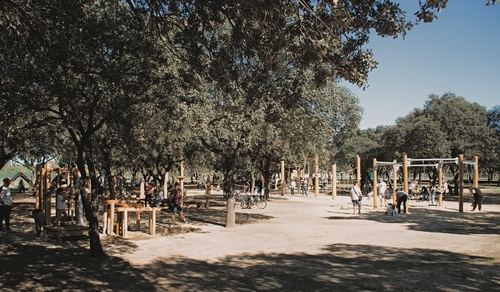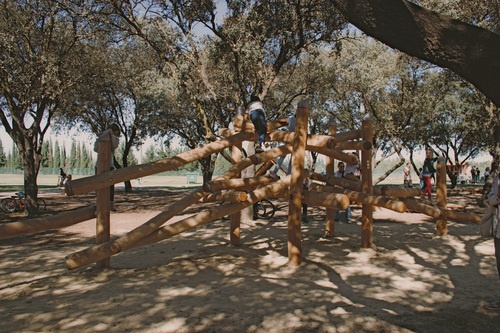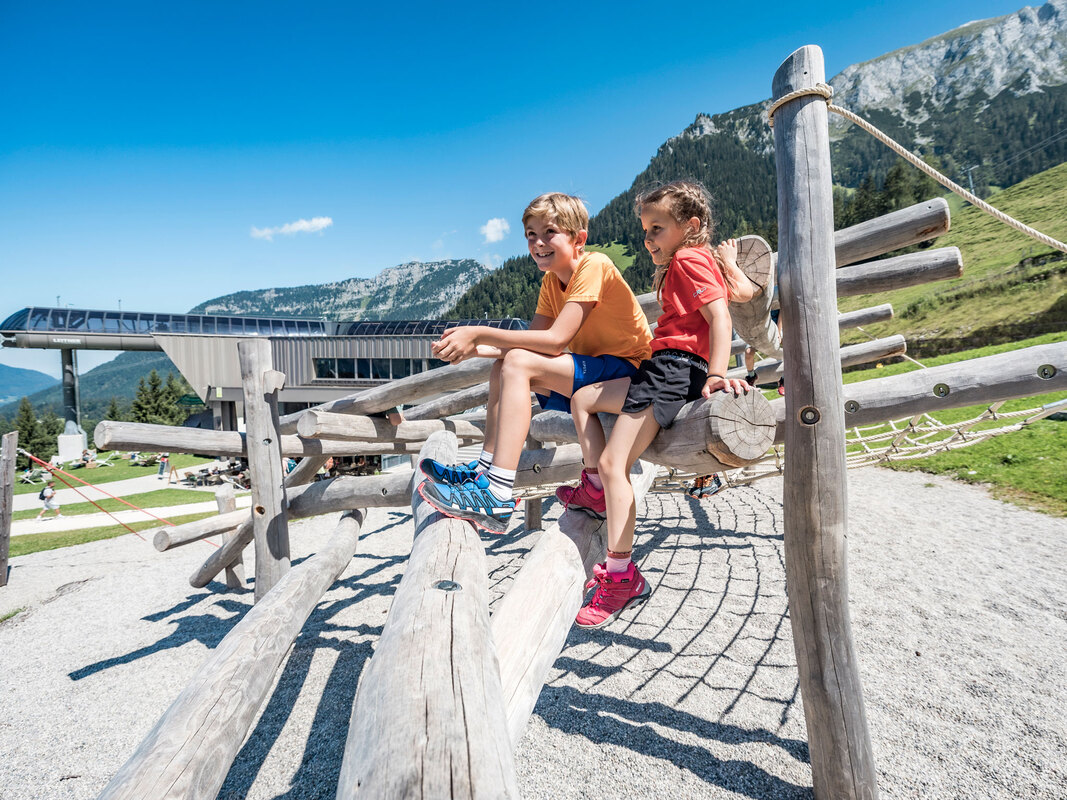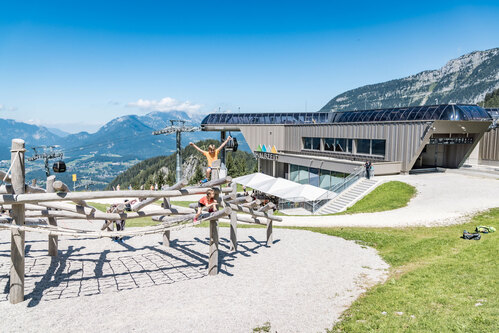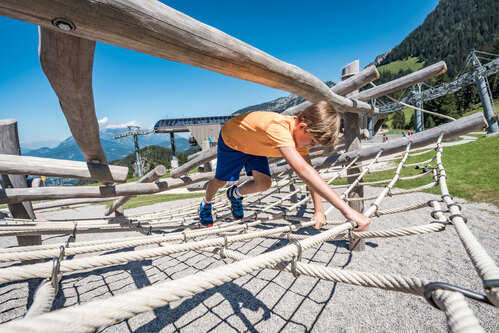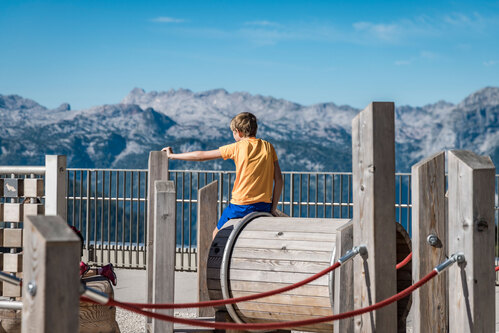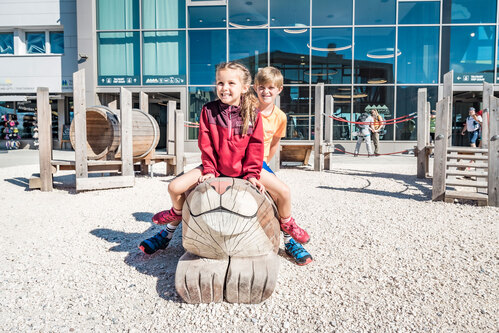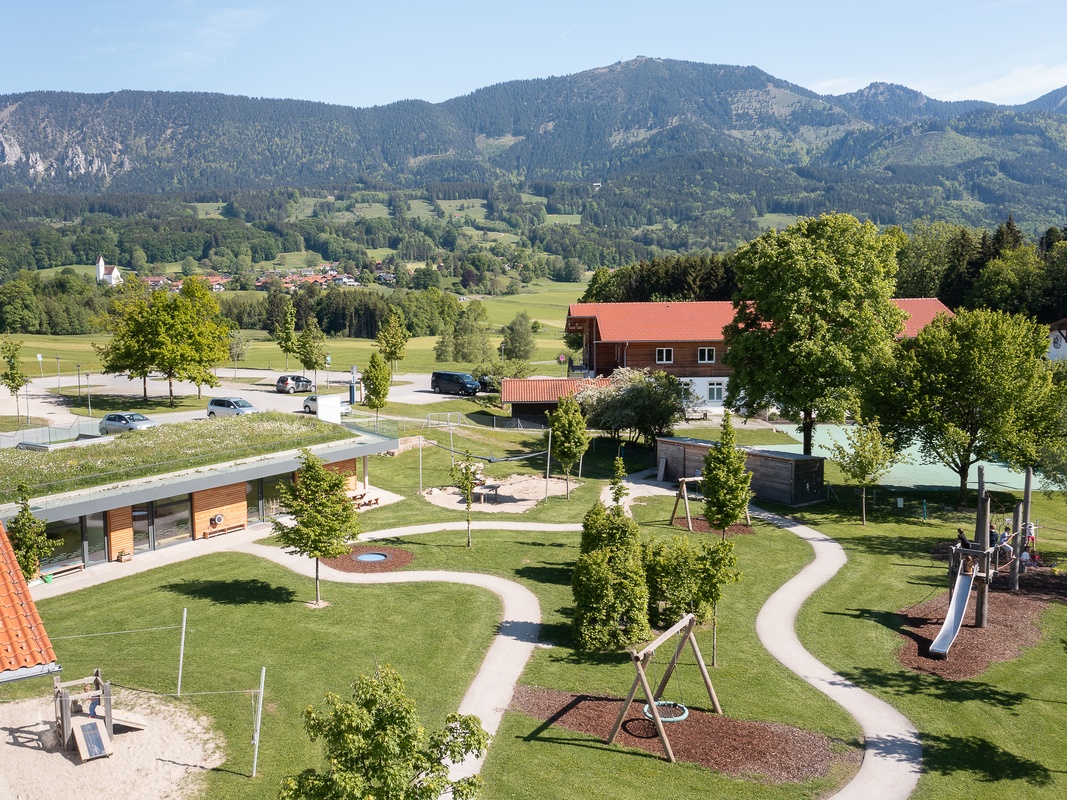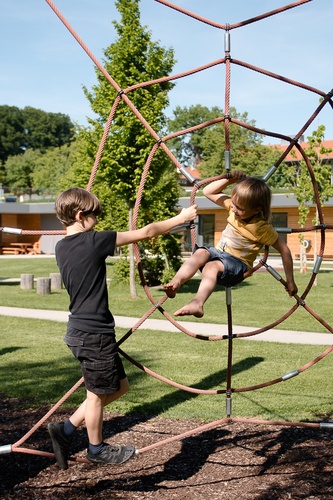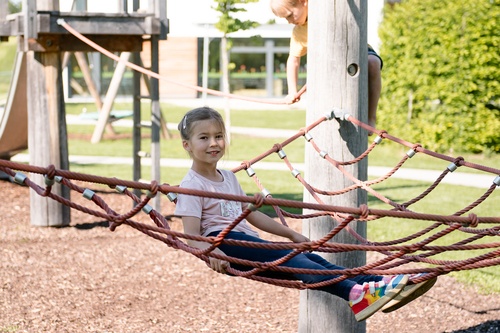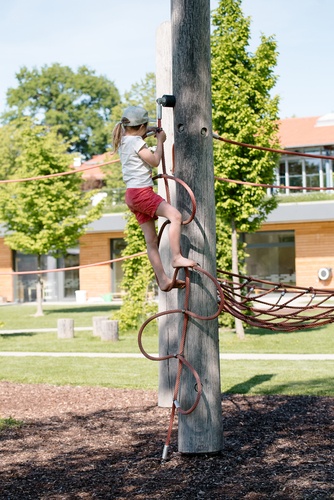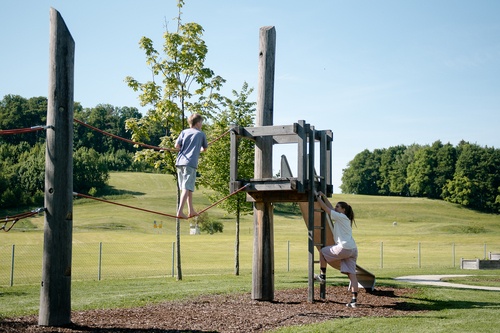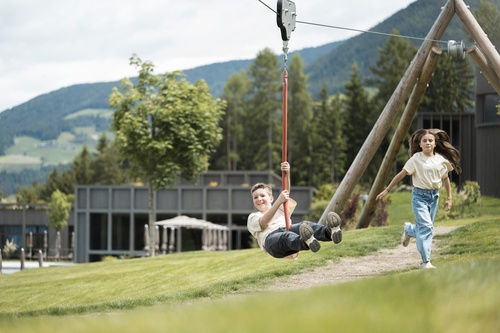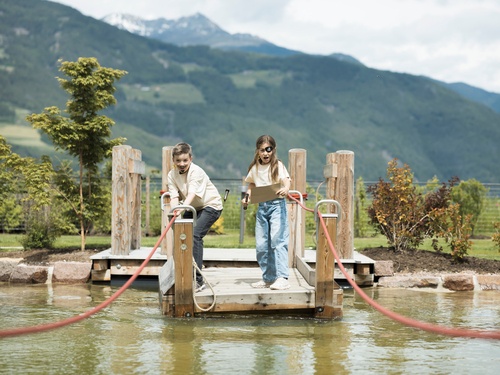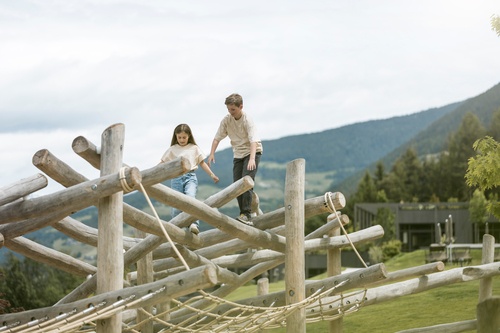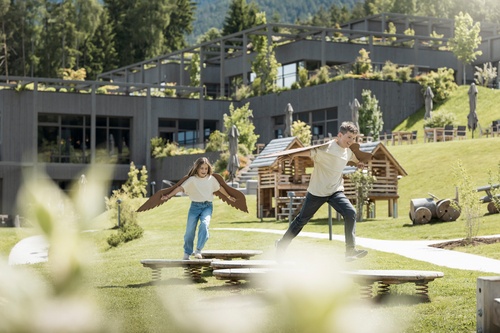

This nursery delights with its lively, play-encouraging and age-appropriate outdoor area.
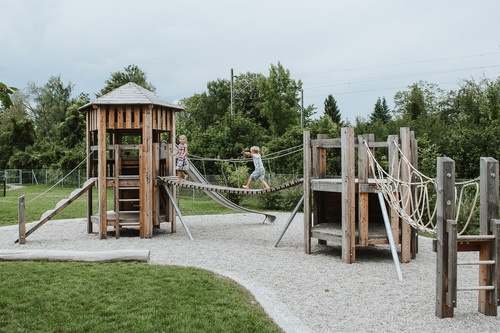
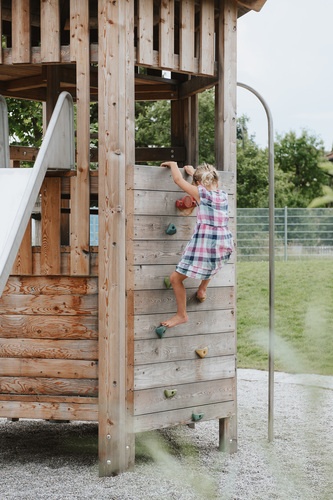
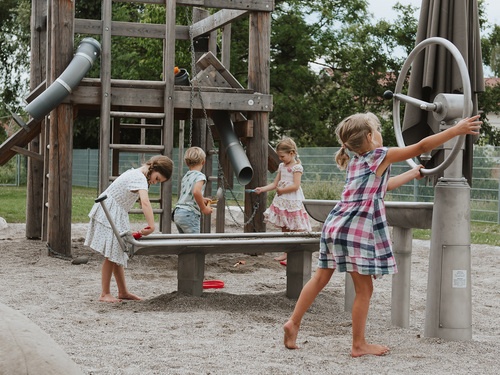
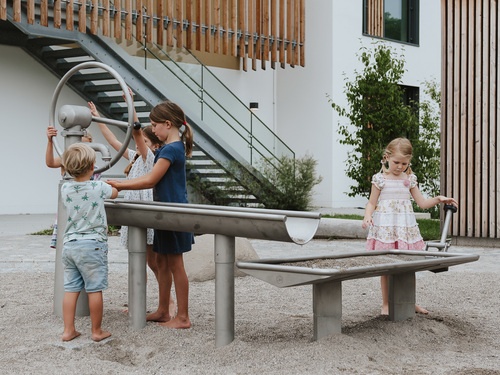
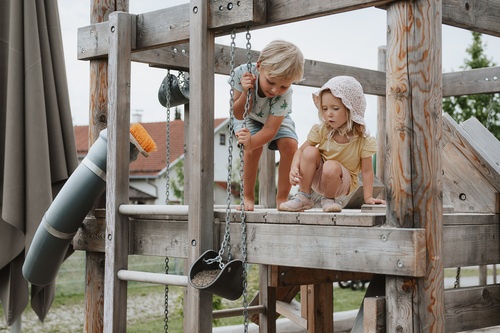
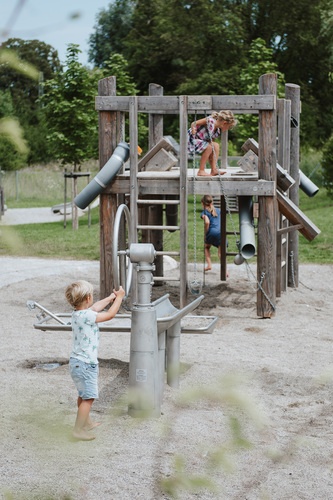
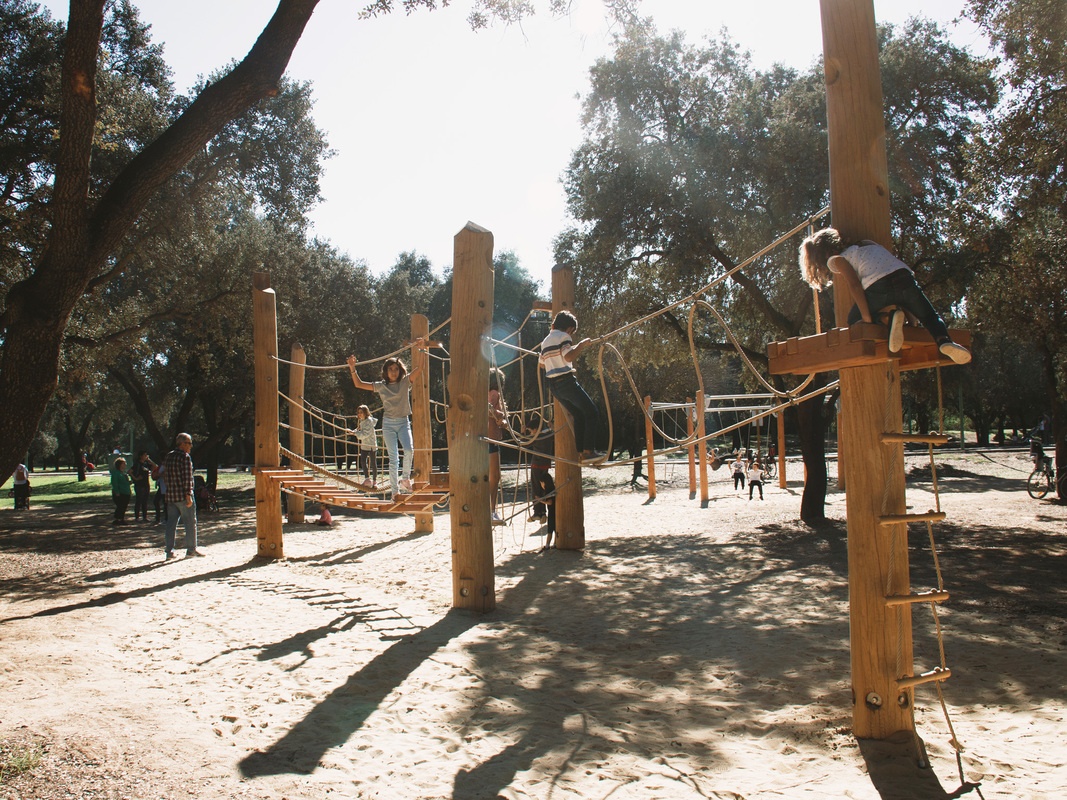
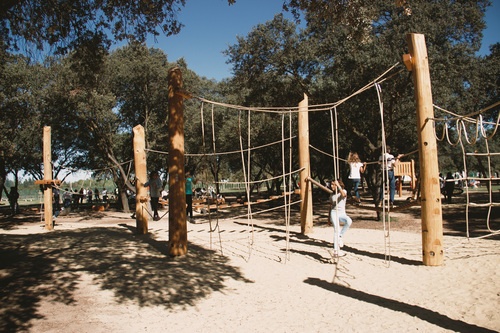
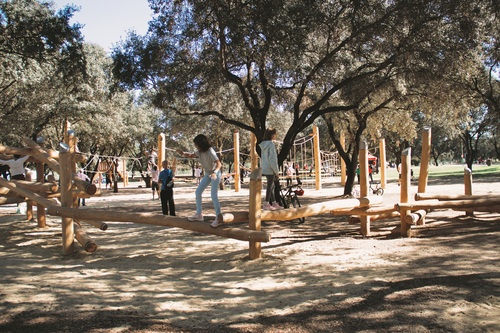
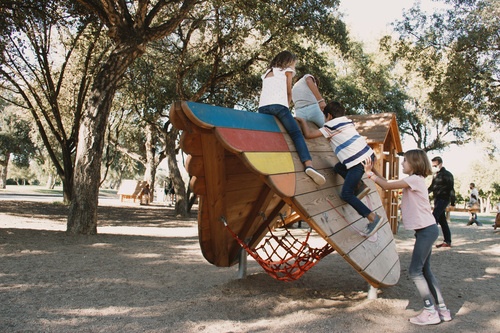
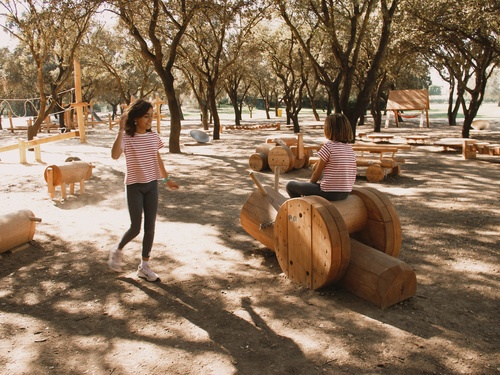
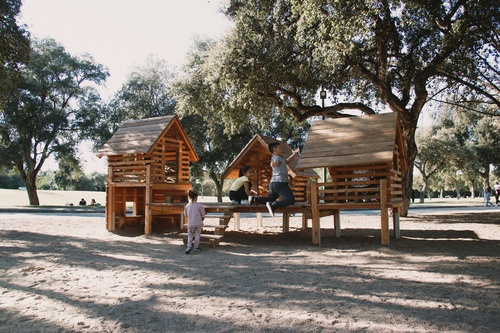
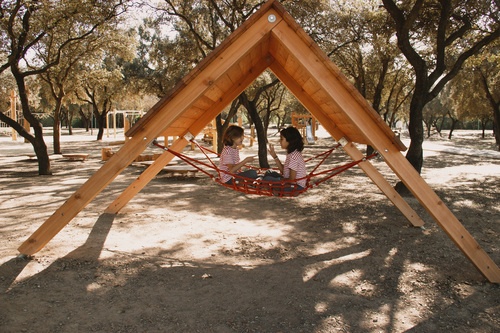
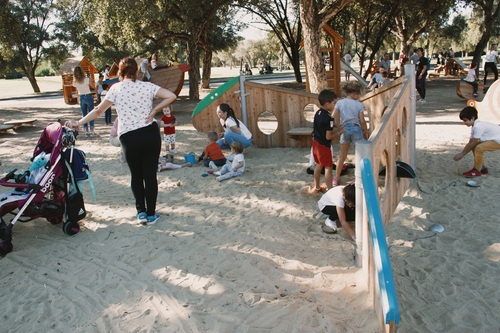
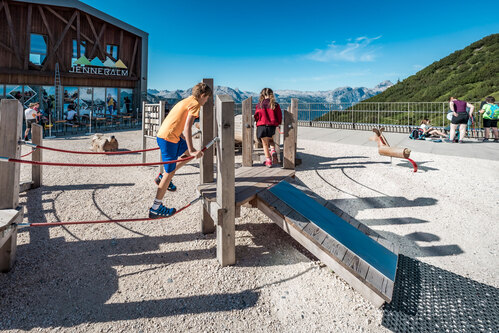
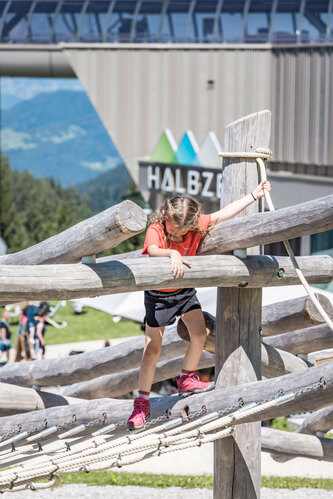
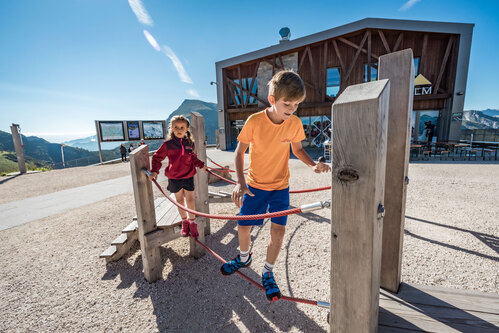
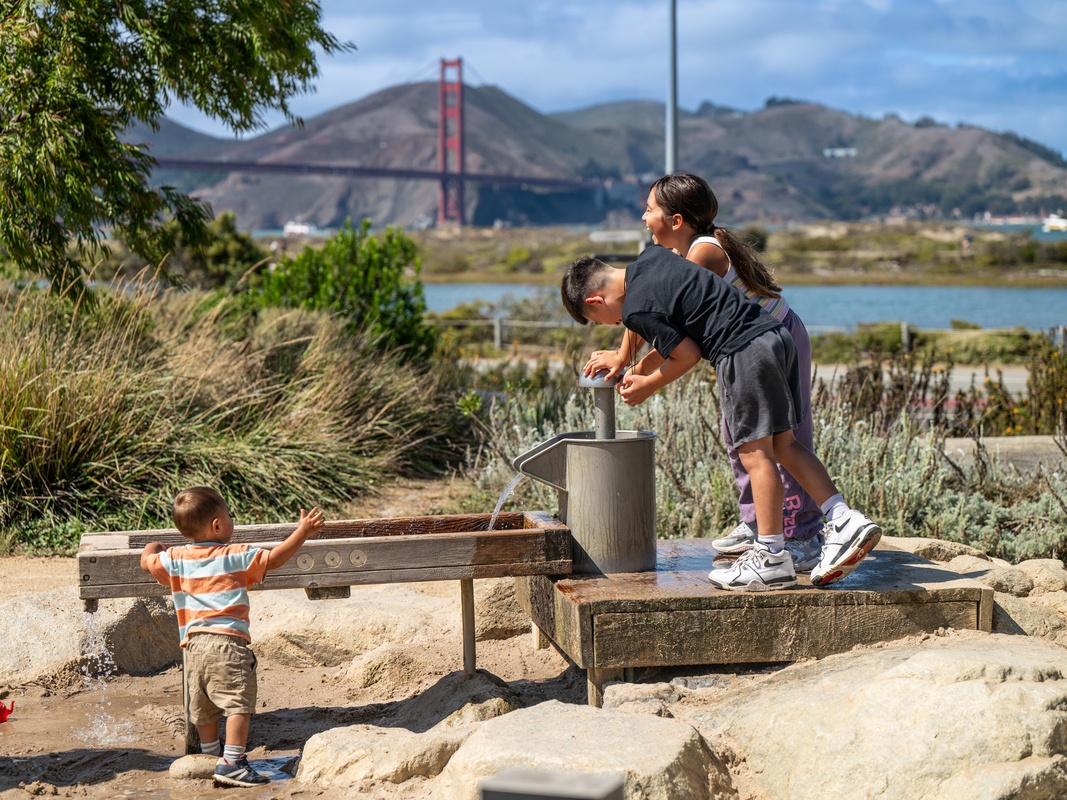
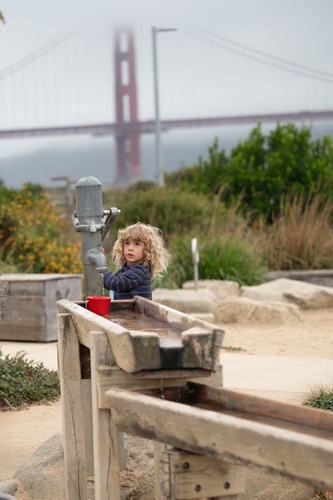
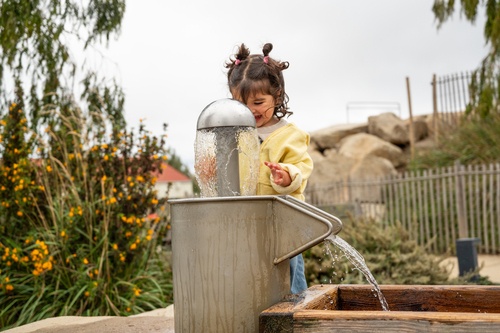
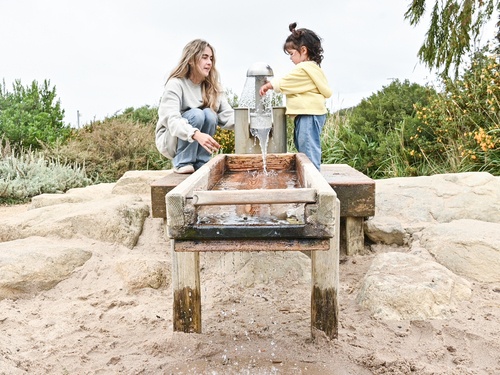
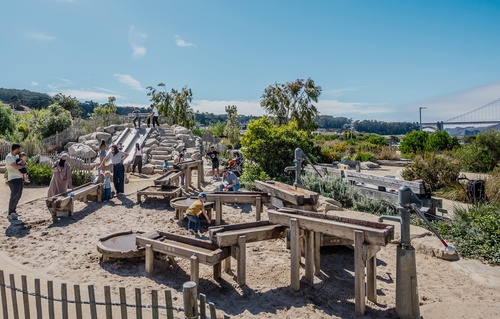
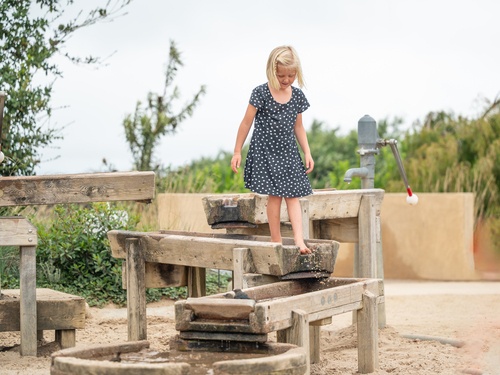
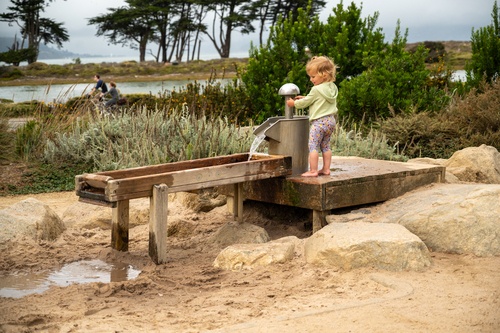
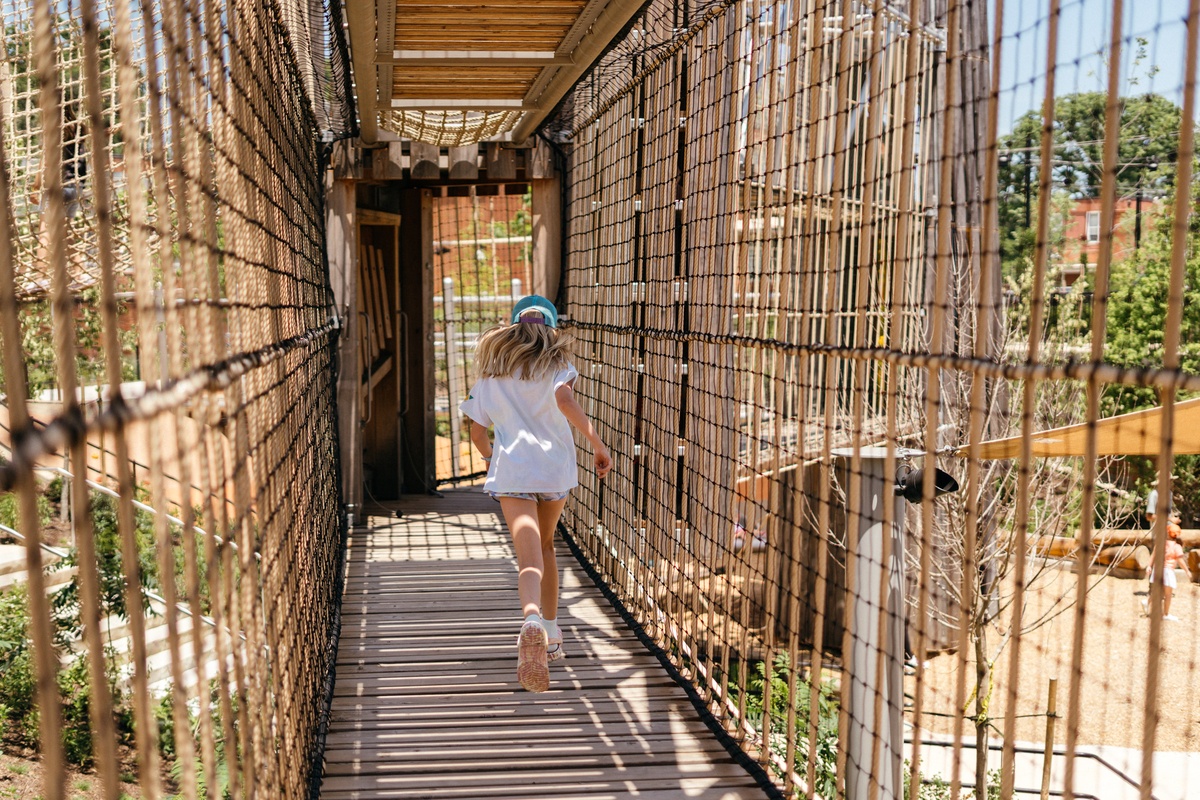
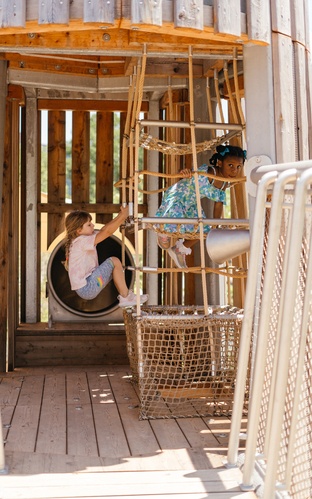
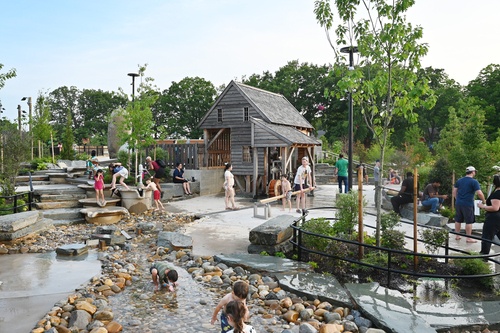
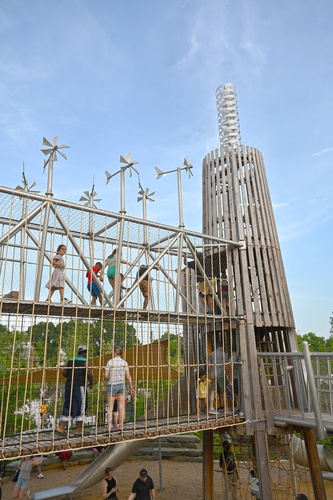
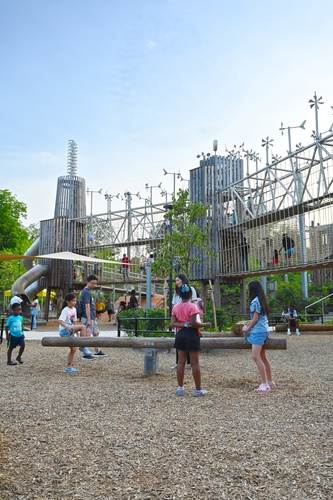
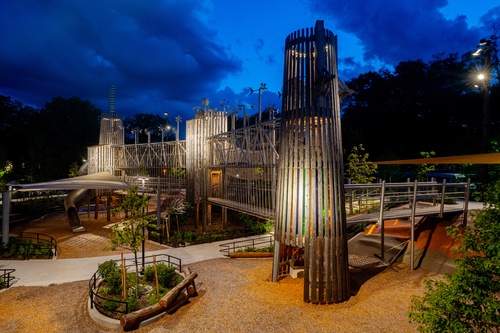
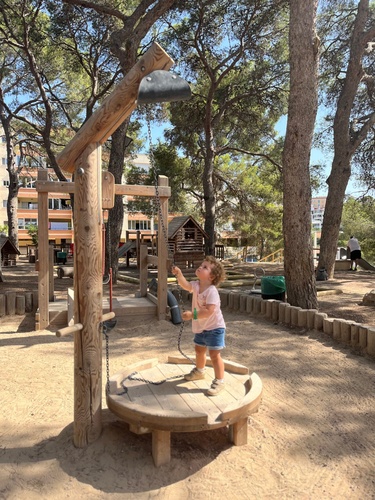
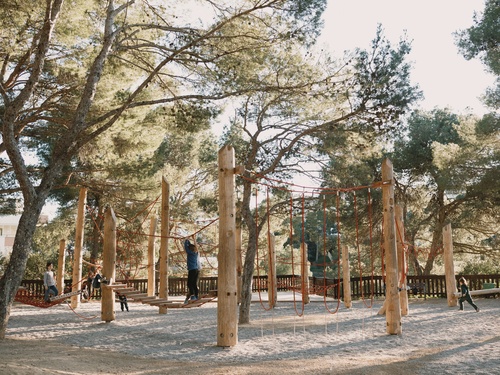
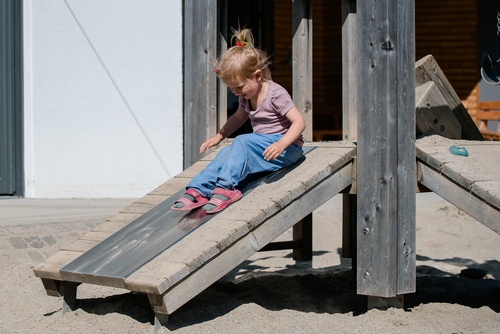
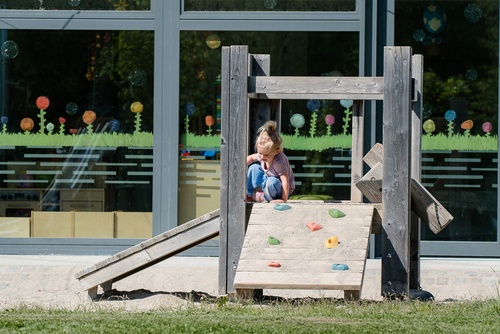
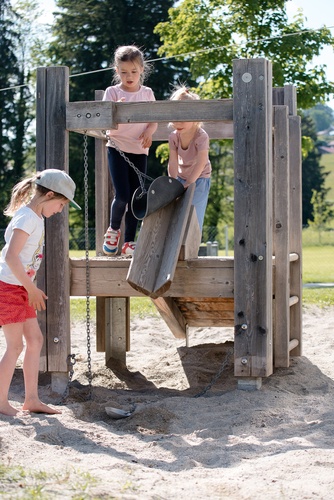
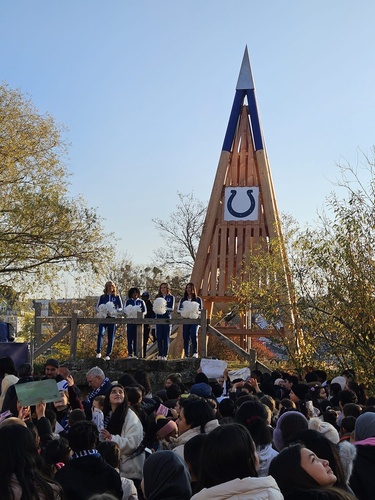
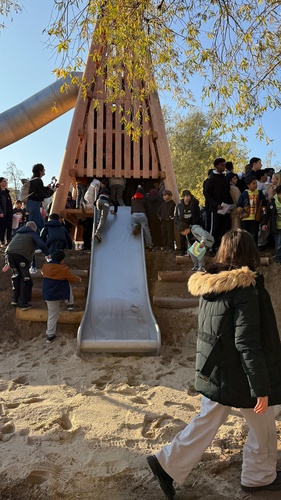
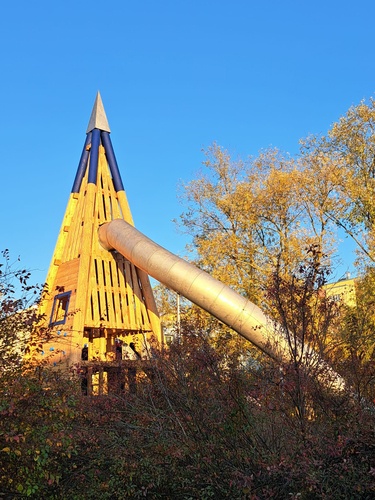
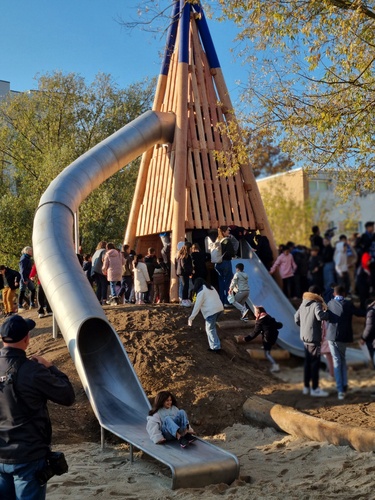
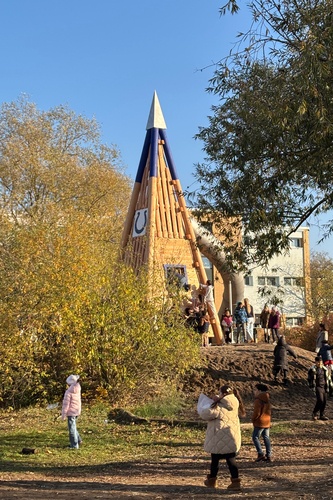
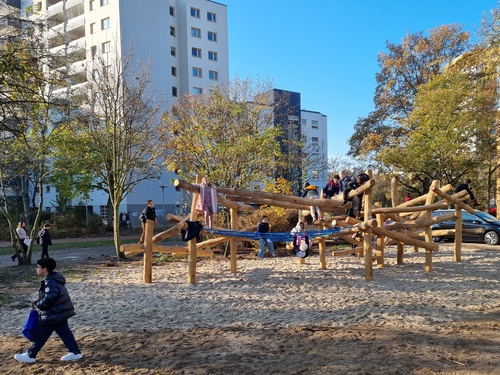
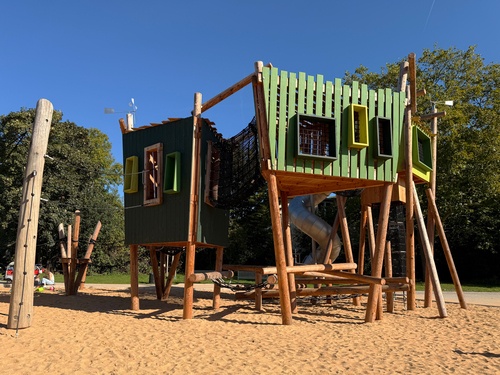
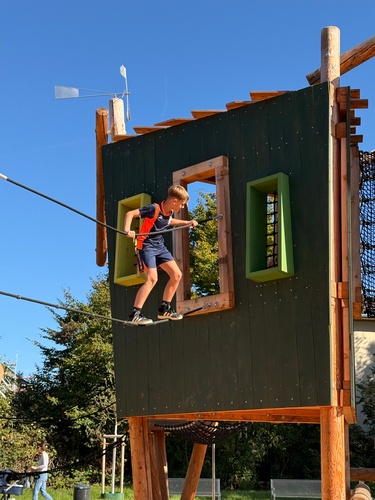
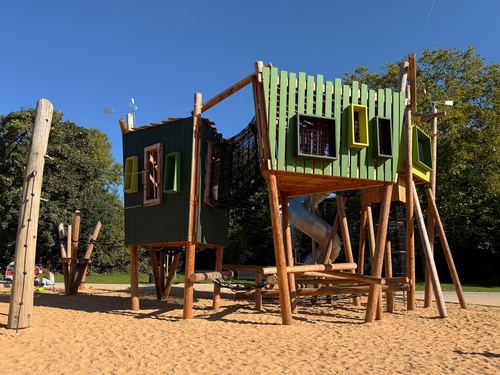
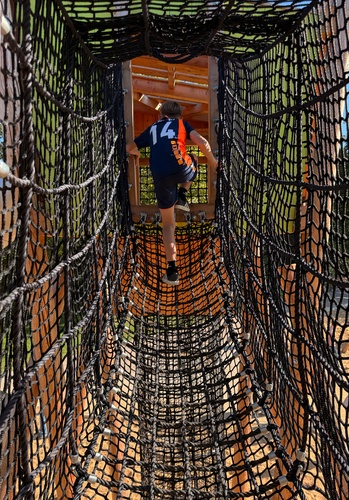
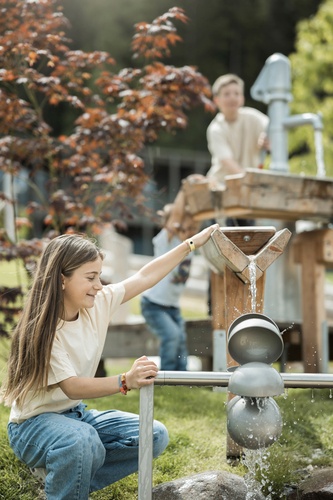
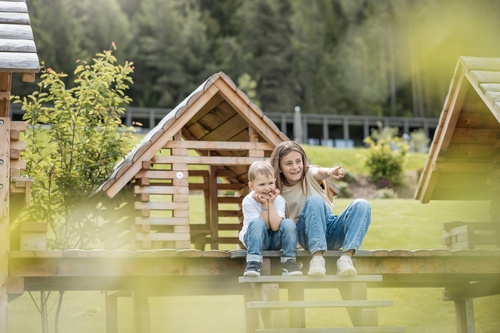
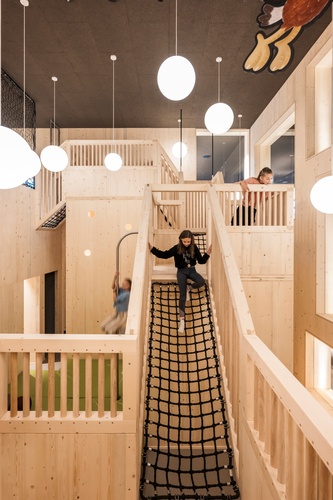
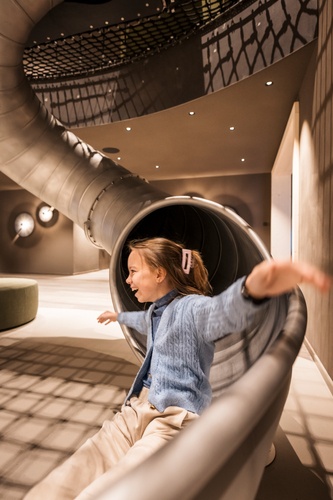
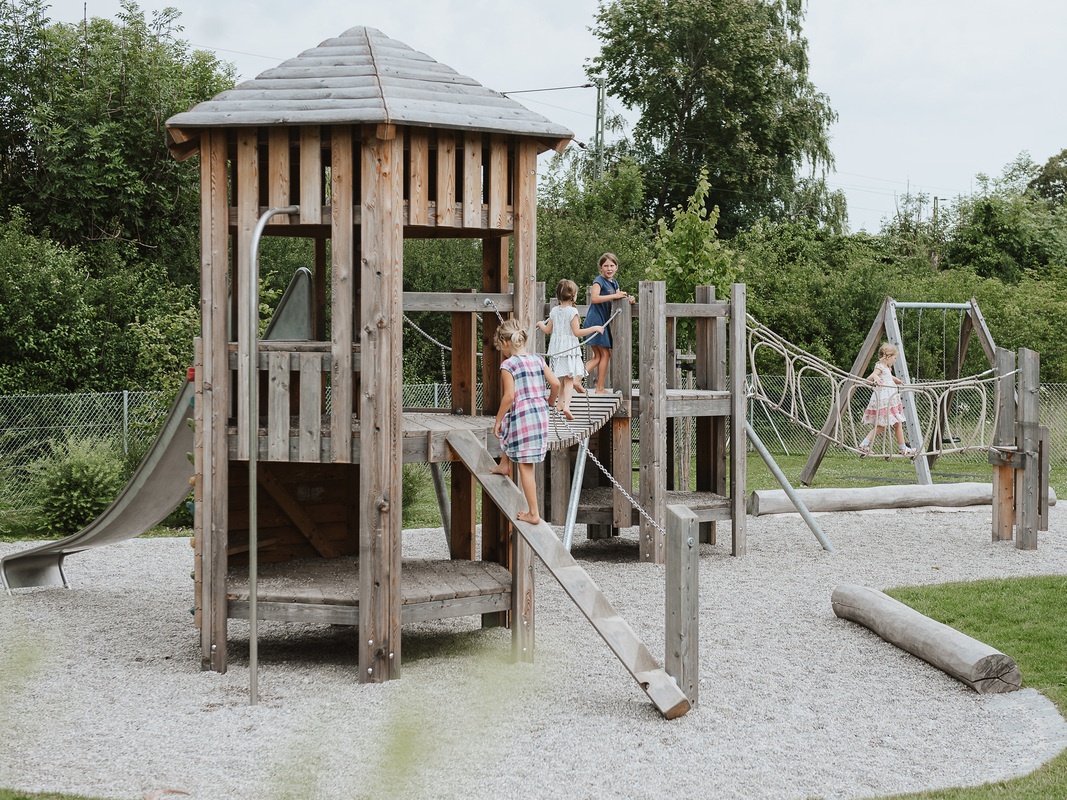
In addition to various small playhouses that encourage hide-and-seek as well as role-playing games, the play area features a large hexagonal hut with a roof, which children can climb via a climbing trunk, a climbing wall or a ladder, and then make an exciting descent via a slide or the curved sliding pole, which is reminiscent of a fire station. There is also a rope bridge with hand ropes leading to the platform on the opposite side. Here, children can practise balancing and test their sense of equilibrium in a playful way. In the sand play area, the little ones can use the Crank Handle Pump to let water flow into the adjoining channels, so that, combined with sand, they can splash about and build to their heart’s content whilst experiencing the elements. On and around the Building Site rig, the working processes of grown-ups can also be wonderfully re-enacted.
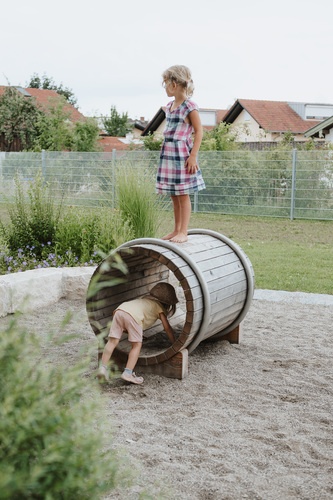
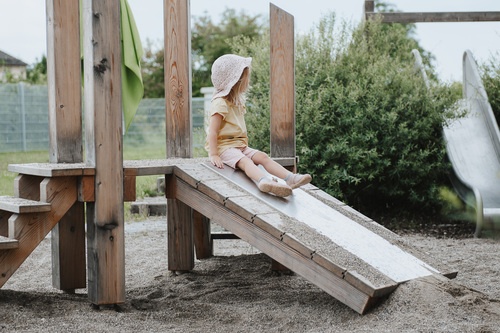
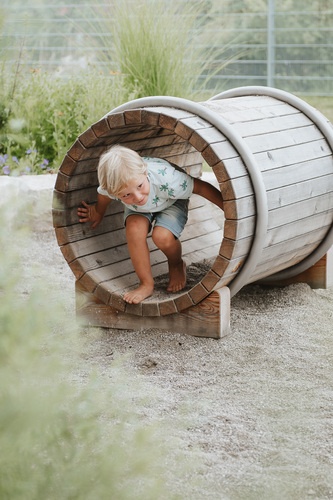
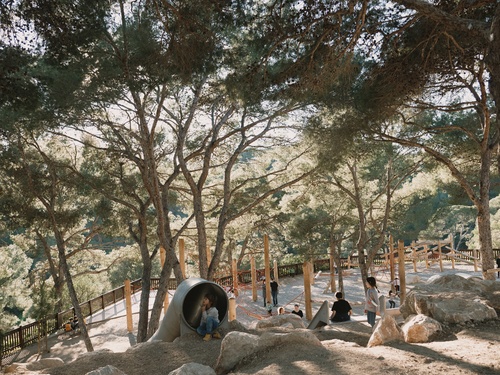
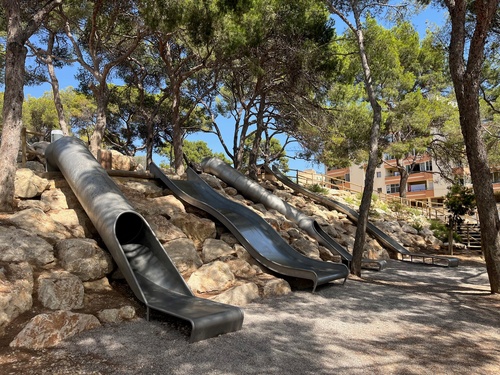
A crawl barrel to slip through and a small slide on the slope round off the playground experience. A space has been created here where children feel both safe and secure whilst also being challenged in a way that is appropriate for their age.
Show more
Show less
In addition to various small playhouses that encourage hide-and-seek as well as role-playing games, the play area features a large hexagonal hut with a roof, which children can climb via a climbing trunk, a climbing wall or a ladder, and then make an exciting descent via a slide or the curved sliding pole, which is reminiscent of a fire station. There is also a rope bridge with hand ropes leading to the platform on the opposite side. Here, children can practise balancing and test their sense of equilibrium in a playful way. In the sand play area, the little ones can use the Crank Handle Pump to let water flow into the adjoining channels, so that, combined with sand, they can splash about and build to their heart’s content whilst experiencing the elements. On and around the Building Site rig, the working processes of grown-ups can also be wonderfully re-enacted.
A crawl barrel to slip through and a small slide on the slope round off the playground experience. A space has been created here where children feel both safe and secure whilst also being challenged in a way that is appropriate for their age.